Τετάρτη 9 Ιανουαρίου 2019

U.S. Says China Willing to Buy More American as Trade Talks End

The Trump administration wrapped up the latest round of trade talks in Beijing, noting a commitment by China to buy more U.S. agricultural goods, energy and manufactured items.
China and the U.S. concluded three days of talks on Wednesday with a cautious sense of optimism that the world’s two biggest economies might be able to reach a deal that ends their bruising trade war.
In a statement, the office of U.S. Trade Representative Robert Lighthizer said the two sides considered ways to “achieve fairness, reciprocity, and balance in trade relations.” Officials discussed the need for any deal to include “ongoing verification and effective enforcement,” USTR said. The U.S. will decide on the next steps after officials report back to Washington.
President Donald Trump and President Xi Jinping have given their officials until March 1 to reach an accord on “structural changes” to China’s economy on issues such as the forced transfer of American technology, intellectual-property rights, and non-tariff barriers. The USTR statement didn’t say whether progress had been achieved on its main concerns.
People familiar with the discussions said positions were closer on areas including energy and agriculture but further apart on harder issues.
China was believed to be preparing its own separate statement on the talks.

Stocks Up

Stocks rose globally after the U.S. and China concluded talks and appeared closer to an agreement, with all major U.S. equities benchmarks rising.
Chinese foreign ministry spokesman Lu Kang said a one-day extension in talks showed both sides are serious about the negotiations. Some disagreements remain on structural issues and they need to be addressed when more senior negotiators meet later on, according to Chinese officials involved in the discussions who asked not to be identified.
Later this month, Lighthizer is expected to meet with Vice Premier Liu He, Xi’s top economic aide who is leading negotiations for China, a person familiar with the situation said last week. Liu made a brief appearance at the talks in Beijing on Monday, boosting optimism that China was serious about making progress on a deal.
The mid-level talks were the first face-to-face meeting between the two sides since their leaders met on Dec. 1. Prior to the meeting, China made a number of concessions to U.S. demands including temporarily cutting punitive tariffs on U.S.-made cars, resuming soybean purchases, promising to open up its markets for more foreign investment, and drafting a law to prevent forced technology transfers.
The negotiations were extended from the two days initially scheduled, according to the Chinese. Trump tweeted “Talks with China are going very well!” late on Tuesday in Beijing.
The U.S. president is increasingly eager to strike a deal with China soon in an effort to perk up financial markets that have slumped on concerns over the trade war, according to people familiar with internal White House deliberations. The S&P 500 Index has fallen about 7 percent since Trump and Xi agreed on a 90-day truce at their meeting in Argentina last month.

Δευτέρα 7 Ιανουαρίου 2019

Five Key Issues to Determine Success of U.S.-China Trade Talks

1. Intellectual Property

The U.S. accusation that China forces American companies to share sensitive technology and steals intellectual property is one of the thorniest issues, and could make or break any potential deal. The 90-day negotiations will focus on “structural changes” in the way China handles technology transfers, intellectual-property protection, cyber-theft and other issues, the U.S. said after Trump and Xi met in Argentina.
China has announced an array of punishments that could restrict companies’ access to borrowing and state-funding support over intellectual-property theft, and is drafting a law to prevent forced technology transfer. But the devil will be in the details and execution.

2. Huawei and 5G

Huawei Technologies Co., China’s biggest maker of telecom equipment, has long denied accusations by the U.S. and its allies of facilitating state-sponsored espionage. The company is racing to develop 5G technology and owns a tenth of essential patents worldwide. But its efforts have been frustrated by the U.S., which has banned its products for government procurement and encouraged other nations to do the same.
Beijing has also demanded Canada release Huawei’s chief financial officer Meng Wanzhou, who was arrested in Canada on the behalf of the U.S. for alleged bank fraud. The FBI is also probing possible Iranian sanctions violations by the company. Two Canadians who were seized after Meng’s arrest remain detained in China.

3. Made in China 2025

Beijing’s “Made in China 2025” plan aims to transform China into an advanced manufacturing leader by targeting 10 emerging sectors including robotics, clean-energy vehicles and biotechnology. The industrial ambition has raised the ire of the White House, which argues its state-led intervention violates WTO rules and could create an unfair playing field for foreign investors. Tariffs imposed by Trump took aim at many of the industries targeted in the plan.
China sees the plan as essential to achieving its long-term economic goals. Last month, people familiar said China may be willing to amend the plan, perhaps even postponing some of it by a decade, if that helps bring an end to the trade war.

4. Energy

The trade tensions have disrupted what should be a sweet deal for the two countries: The U.S. is becoming a major oil and natural gas exporter while China has emerged as the world’s biggest buyer of both. While lifting China’s retaliatory tariff on U.S. liquefied natural gas may revive sales, the bigger, longer-term concern for the industry is restoring enough trust to convince Chinese companies to invest the billions of dollars in future American LNG export projects. Meanwhile, any assurances from Beijing that it won’t target U.S. crude would help dispel the concerns that choked off sales last year.

5. Agricultural imports

Investors will be watching to see if China removes retaliatory tariffs on U.S. farm products -- including soybeans, corn, cotton, sorghum and pork -- that severely hurt America’s heartland. Lifting the tariffs could encourage private buyers to immediately resume U.S. farm-product purchases. China may also remove its anti-dumping and anti-subsidy tariffs on U.S. distiller’s dried grains, which China is the largest buyer of, as well as allow imports of U.S. poultry after it gave the green light on U.S. rice purchases. If talks fail, China may also cancel some soybean orders that have been placed over the past weeks.

Minister's 'guarantee' Brexit vote will happen next week

All the latest updates as Westminster gears up for next week's crucial vote on the prime minister's Brexit deal.

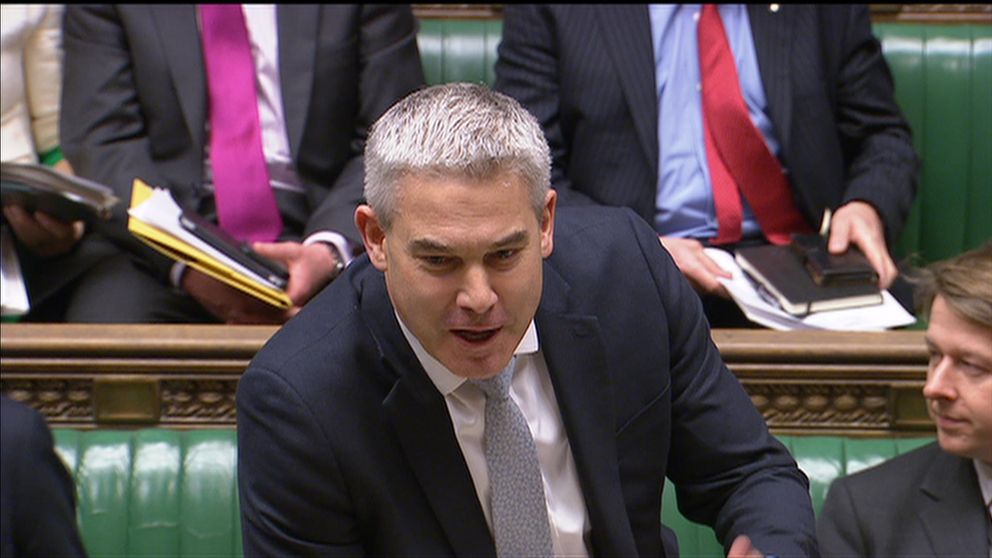
Stephen Barclay speaking in parliament on 07/01/19

  • Rescheduled date comes after original vote pulled
  • Brexit secretary gives 'guarantee' vote will happen next week
  • More than 200 MPs call on PM to rule out 'no deal'
Brexiteer: PM will '100%' not change my mind on Brexit deal
Andrea Jenkyns, another Brexiteer, also says the PM will not be able to change her mind on the Brexit deal.
She says: "Of course not, no. I'm bringing one of my local councillors - I thought I might as well use this opportunity to show her Number 10!"
She adds there is "100%" no chance of her mind being changed on May's Brexit agreement.

Tory MP Andrew Bridgen, a fellow Brexiteer critic of the PM's deal, suggests he won't be persuaded to back May's agreement by tonight's event.
On his way into Number 10, he says: "I wouldn't have thought so, no. I'm not sure that is the point of the drinks reception because Einstein said repeating an experiment expecting a different result is a sign of insanity.
"I think it's about party cohesion, it's going to be difficult times over the next few weeks and we need to come back together again after the vote."

Have PM's chances of getting her Brexit deal past MPs improved?

As the PM tries to secure last-ditch concessions, Sky's Tamara Cohen says her chances of getting her deal through remain daunting.

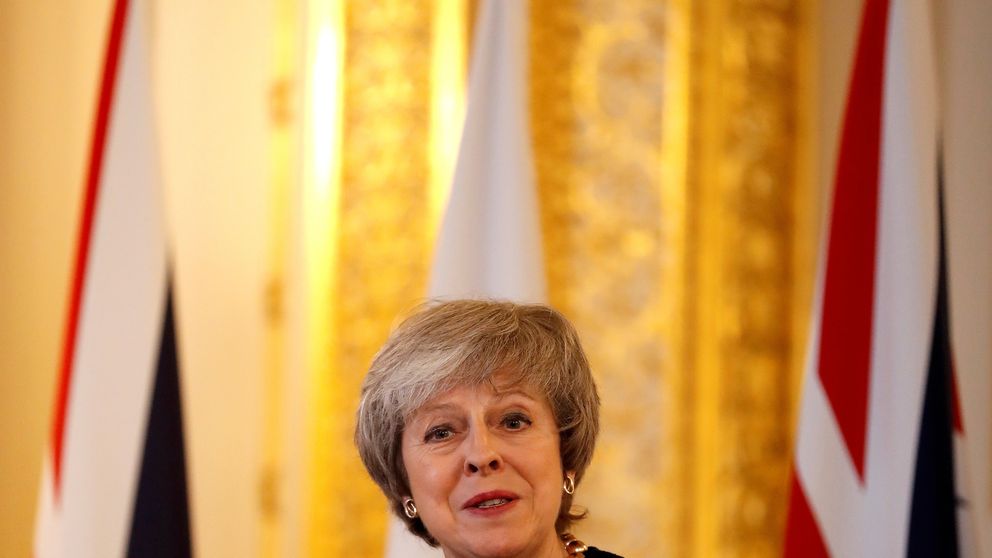
Theresa May

Downing Street was hoping that MPs having a break over Christmas - a time to reflect on the options - would soften opposition to the prime minister's deal.
As parliament returns today, and the vote looms next Tuesday, the message from those I've spoken to is that, as per Theresa May's election catchphrase: nothing has changed.
Insiders are already resigned to more than one attempt being needed to get it through parliament. One cabinet source says: "I don't think it's winnable, but if she survives losing it, she could win if it came back for a second vote."
The prime minister is yet to unveil the assurances she is seeking from EU leaders in order to win MPs over on the issue of the backstop, in which Northern Ireland would remain in EU rules unless another way is found to keep the border open.
But since she dramatically called off the vote in December, the mood does not appear to have changed.
The DUP, whose votes are crucial to unlocking the support of Brexiteers, have only upped the ante over the past few days.
After representatives from the party met for lunch with Mrs May last week, Brexit spokesman Sammy Wilson was asked in an interview if there was any way his party could support the prime minister's deal and replied: "No, there is not."
Westminster leader Nigel Dodds described the backstop on Sunday as "poison".
EU leaders want to help salvage the withdrawal agreement they have spent two years negotiating, but binning the backstop altogether is simply not on the agenda.
Leo Varadkar, the Irish prime minister, told reporters on Friday after a call with Angela Merkel that the pair had a "brainstorm as to what we could do to assist Prime Minister May in securing ratification of the withdrawal agreement" but that this would not "change or contradict what was agreed back in November".
One loyal Conservative MP who backed Remain and wants the prime minister's deal to get over the line, told me over the weekend: "The only way [it gets through] is if the DUP publicly backs it, unless that happens it has a snowball's chance in hell."
Of course the more it looks as if the vote is lost anyway, the less the incentive for the EU to offer concessions if they will only be asked for more afterwards, in order for the government to have another try.
MPs in the European Research Group of hardline Brexiteers say they still expect dozens of MPs to oppose the deal in parliament, whatever is offered.
They will be invited to Downing Street for drinks this evening, but goodwill is not likely to be flowing. One former minister in the group, asked would be needed to convince him, reiterated: "Completely dropping the backstop."
The attempt to convince MPs that no deal would cause disruption and economic damage is hardly helped by the fact that the message is failing to cut through to Conservative members.
According to polling last week, the party faithful heavily oppose the deal, and 57% of them would favour no deal, if given three options including Mrs May's deal and remaining in the EU.
In a TV interview yesterday, the prime minister insisted the vote would go ahead, with the hope that new compromises from the EU can clinch it, but did not deny it could be held multiple times.
Some Conservatives wonder, optimistically, if Labour MPs might eventually soften their opposition to the deal, out of concern that they would be facilitating a no deal exit.
Labour sources today insist their position - not to vote for it - is unchanged, and deny reports that MPs could abstain in order to allow the withdrawal agreement though, infuriate the DUP and perhaps attract their support for the nuclear option of toppling the government.
With time ticking down, and no deal preparations ramping up, senior MPs in all parties are grouping together to try and force Mrs May's hand.
Former cabinet ministers Nicky Morgan and Yvette Cooper are leading an attempt to block tax changes unless the threat of leaving with no deal is ruled out - which could go ahead tomorrow.

Netanyahu calls for U.S. to recognize Golan Heights as Israeli territory

Prime Minister Benjamin Netanyahu has made his first public appeal for the United States to officially recognize Israeli sovereignty over the Golan Heights.
“The Golan Heights is tremendously important for our security,” Netanyahu said in Jerusalem, alongside U.S. National Security Adviser John Bolton on Sunday night, adding Israel “will never leave the Golan Heights,” and stressed the gravity of all countries recognizing the region as Israeli territory.
Netanyahu also acknowledged he has previously raised the matter behind closed doors with President Trump, who reportedly supported the idea. But Trump was concerned by a possible rebuke from Russia, the leading international authority and staunch supporter of Syrian President Bashar al-Assad, which mandates Israel is Syrian territory.
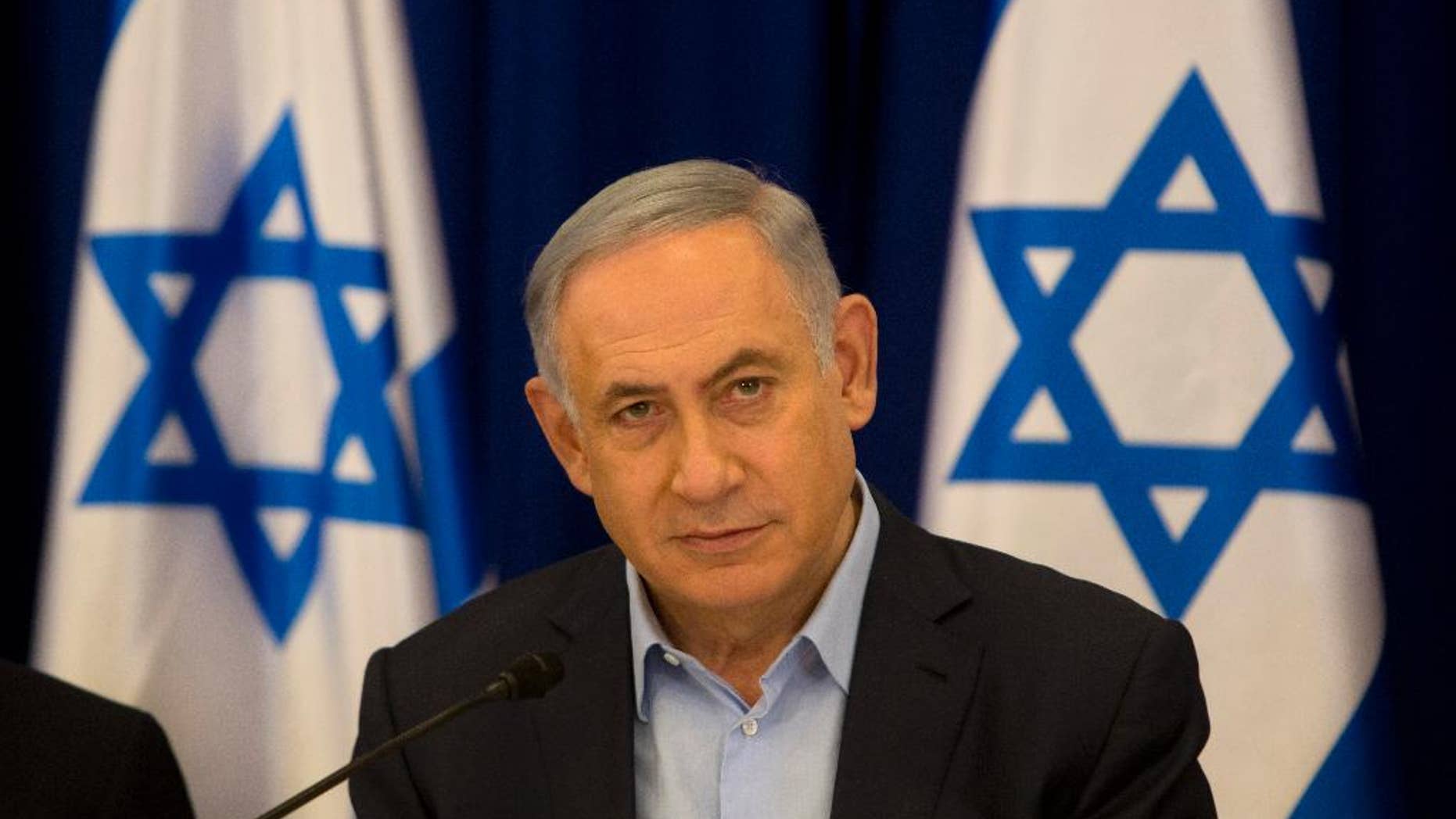
Israeli Prime Minister Benjamin Netanyahu said Sunday his country will never withdraw from the Golan Heights, and the strategic plateau bordering Syria will forever stay in Israeli hands. (AP Photo/Sebastian Scheiner, Pool)
Much of the international community regards the Golan Heights as part of Syria, albeit under Israeli occupation, since the neighboring nation took it during the 1967 Six-Day War. Republican Senators Tom Cotton and Ted Cruz have both called for the Trump administration to observe Israel’s sovereignty in the Golan by putting forward bills, which the White House is yet to take a position on.
One Israeli intelligence source told Fox News there is a “good chance” the U.S. will heed the request, as quite simply “they live there, they recognize it as Israeli,” and it’s just a matter of the United States also making that formal recognition. The move would be seen as similar to the controversial decision last year to relocate the American embassy to the “Israeli capital” of Jerusalem.
Netanyahu’s latest push, which comes on the heels of Trump’s announcement that the U.S military will completely withdraw from Syria, has picked up both positive and negative reactions from experts and analysts.
“It seems increasingly likely the United States is prepared to officially recognize the Golan Heights as part of Israel. Acknowledging Israeli sovereignty over the strategically-critical heights would obviously be in Israel’s interest, but also in the interest of the United States,” explained Jonathan Ruhe, Associate Director, JINSA’s Gemunder Center for Defense and Strategy. “It would underscore U.S. support for Israel’s self-defense, in particular against Iran and its proxies in neighboring Syria – an issue that’s increasingly important as the United States reduces its own presence in that country and relies increasingly on its Middle East allies to push back against Tehran.”
Yet Ruhe emphasized “potential blowback in the form of negative reactions from the rest of the Middle East – including from Israel’s Arab partners” would not be out of the question.
“But as we saw with the embassy move to Jerusalem, this wouldn’t necessarily have strategic or enduring negative consequences for the United States or Israel,” Ruhe continued. “Moreover, unlike the issue of Jerusalem, the Golan wouldn’t be part of any future Israel-Palestinian peace agreement, making U.S. recognition of Israeli sovereignty much more straightforward than any issue involving Jerusalem or other territories like the West Bank.”
And according to Raphael Marcus, Visiting Research Fellow at the Department of War Studies at the King's College London the Golan Heights indeed “remains strategically and militarily important for Israel, in light of Iranian and Hezbollah operational activity in southern Syria, specifically on the Syrian side of the Golan.”
“Since at least 2015, both Iranian military operatives and Hezbollah have attempted to set up forward military outposts to threaten and attack Israel from the Syrian side of the Golan,” he cautioned. “Additionally, the murderous Assad regime is obviously not a responsible world player, and it remains a security interest of Israel to keep the Golan Heights which provides a critical vantage point over northern Israel.”
But others view it as Israel using the U.S in an overreaching quest.
"This is another sign of how the Israeli government sees in the Trump administration an unprecedented opportunity to advance goals long rejected by the international community,” said Ben White, journalist, and author of “Cracks in the Wall: Beyond Apartheid in Palestine/Israel.” “Should Netanyahu get his wish, then we might also be another step closer to Israel's formal annexation of some, or all, of the occupied West Bank.”
Michael Koplow, Policy Director, Israel Policy Forum pointed out that while remaining in the Golan is a "security imperative for Israel," perhaps creating a long-scale stand at this time is not necessary.
"The drawback to formal American recognition of Israeli sovereignty on the Golan, however, is that it is an issue that has been entirely non-controversial, unlike Israel’s presence in the West Bank. Israel can easily maintain the status quo on the Golan without any U.S. recognition whatsoever, but American recognition runs the risk of turning what has been a quiet issue into one that all of a sudden becomes controversial once the spotlight is shone on it," he added. "It may end up swapping a security win for a public relations win, which is particularly dangerous now given the heightened importance of keeping the Golan quiet as the Syrian endgame includes a permanent Iranian presence across the Israeli border."

North Korean train crossing into China sparks rumor of possible 4th meeting between Kim, Xi

A mysterious North Korean train spotted crossing into China late Monday sparked rumors that leader Kim Jong Un was making his first visit of the year with Chinese President Xi Jinping amid talks of a possible second U.S.-North Korea summit.
Rumors about Kim’s visit to China began late Monday when a North Korean train painted green carrying a “senior North Korean official” was reported crossing over the North Korea-China border, South Korea’s Yonhap News Agency reported. Heavy security was spotted passing through the train station in the Chinese border city of Dandong just after 10 p.m. local time.
"It hasn't been confirmed whether a senior North Korean official was on the train," a source told Yonhap.
South Korea’s Hankyoreh newspaper also reported a North Korean official, possibly Kim, was on the train that crossed over the countries' border late Monday, according to Reuters. Kim used a very distinctive armored train made especially for him on visits to China last year.
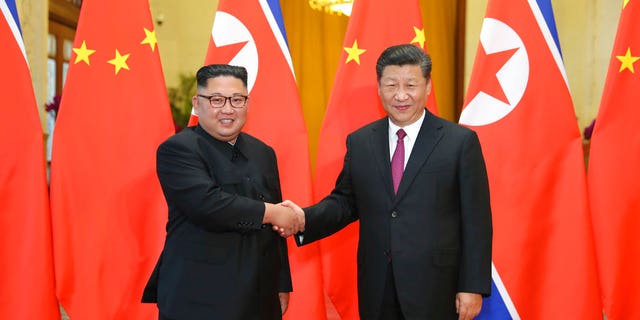
North Korean leader Kim Jong Un may be heading to China to meet with Chinese President Xi Jinping.